
Creutzfeldt-Jakob Disease: When a Simple Misfolding Becomes Fatal

Case #O2005-570: The results of these tests performed on the case that you submitted confirm the diagnosis of prion disease consistent with sporadic CJD M/M(1)1(2) according to the classification of sporadic prion disease proposed by Parchi et al. (Annals of Neurology 46:224-233, 1999). The PrP gene sequencing rules out the presence of a pathogenic mutation in the PrP gene, excluding that the prion disease in the case you submitted is familial according to the current criteria for familial prion disease. – National Prion Disease Pathology Surveillance Center Cleveland Ohio
Five months prior my grandmother was a spunky 72-year-old, Life Master in bridge, and had tennis skills that would have put most of the population to shame. When she was not pursuing one of those hobbies, she could be found taking me to the park to walk Tio Pepé, a feisty little chihuahua whom she kept at a perfect body condition score until the day she died. As a side note, this was NOT an easy task and involved weekly trips to the post office for weigh-ins since my grandpa believed food was the best way to show Tio love. We also spent countless hours together at the Wild Animal Park watching the deer, feeding the lorikeets, and exploring all of the exhibits. Needless to say, her intelligence and whit set her apart and made her a force to be reckoned with.

In what seemed like the blink of an eye, the visits to my grandparents’ house became less frequent, and I was told that grandma was sick. Little did I know or have the capacity as a four-year-old to understand the true depth of her illness, but at that time, neither did the doctors… Within the span of three months, she rapidly became an unrecognizable shell of herself.
Early in the course of her disease, she kept saying that something just didn’t feel right. She felt like her brain was “off,” but couldn’t pinpoint why. She was bounced between doctors, neurologists, psychiatrists and placed into different facilities, including a psychiatric ward, with an attempt to figure out what was going on. As a self-sufficient woman used to moving a mile a minute, this rapidly progressing disease took a toll on her and caused her to spiral into severe depressive episodes. She also began to isolate herself from family members and exhibited bouts of frustration, both of which were unusual behaviors to see from my loving grandmother.
One afternoon, I remember my parents leaving the house in a rush after getting a panicked call from my grandfather. He explained that my grandmother had locked herself in a room and threatened to end her own life. She luckily responded when my mom started speaking through the door and eventually convinced her to unlock the door and let her in. With a face trying to hold back fear, she told my mom that she felt like she was going crazy and just knew something wasn’t right.
This rapid decline in cognitive function continued and began to be accompanied by ataxia (the loss of balance and coordination). Her fine motor skills began to dissipate, and her body experienced periods of rigidity along with myoclonus (muscle jerking). Progression of these clinical signs occurred until she passed away on March 7, 2005, roughly three months after the onset of her clinical symptoms.
As I grew older, and my passion for science and medicine grew, I became determined to develop an understanding of the disease that robbed my seemingly healthy grandmother of her golden years in the blink of an eye.
After the post-mortem diagnosis of a prion disease, families are often left with unanswered questions just as mine were. The world of prion research is constantly evolving and while great strides are being made, these diseases are still 100% fatal and depending on the mutation, cognitive and physical decline can happen rapidly.
In short, prion diseases occur when the prion protein PrPC is misfolded and begins to replicate. These misfolded proteins clump together and form plaques which are not the friendliest to brain tissue. As the disease progresses, the brain, more specifically the cerebral cortex, begins to resemble a sponge. This is why these patients exhibit signs such as memory loss, incoordination, myoclonus, loss of ability to walk, talk, and function. This is the simplest way I can explain a prion disease so if you are content with the information above, feel free to stop reading here and go about your day slightly more educated! My goal is to make this post accessible to all levels regardless of prior prion knowledge so when we get into the nerdy science sections, there will be periodic breaks labeled as “the plain speak” which is my attempt to distill the previous concept(s) into a digestible manner. I have also created some graphics for all of you who like visuals. If you are in it for the long haul and want to do a deeper dive into this fascinating topic, buckle up because we are about to embark on a little history adventure!
History
The exploration of prion diseases began in the 18th century with Merino sheep as reported in German literature in 1759.6 Spanish shepherds noticed their animals demonstrated abnormal behavior consisting of an altered gait, excessive licking, and intense itching which led them to scrape against fences. Affected sheep would slowly stop eating, become lame and emaciated and then die. Later termed, “scrapie” (due to the intense scratching these animals experienced) this disease would be coined as the first, in a new class of neurological disorders known as transmissible spongiform encephalopathies (TSEs).26
Flash forward a few hundred years and in 1920-1921 Hans Gerhard Creutzfeldt and Alfons Maria Jakob recorded the first human cases of what later became known as Creutzfeldt-Jakob disease.6 A few years later in in the Eastern Highlands of Papua New Guinea, Australian anthropologists had begun studying the Fore people and wrote about a disease we now know as kuru.26 These anthropologists observed the Fore people and recorded information about their culture and diseases. They believed this disease had three distinct phases; the person is able to walk but has an unsteady gait, the person isn’t able to walk but can sit, the person is unable to maintain a seated position.6 The progression through these stages happened rapidly and during that time period, many believed this condition was linked to sorcery.
In the 1950s, medical investigators began looking into this disease and added a prodromal stage (early signs/symptoms before major clinical signs appear). This prodromal stage included headaches, pain in their limbs and abdomen, and weight loss. There were no signs of fever, cough, or sore throat which provided a challenge while trying to link this condition to an infectious agent.6
In these tribes, researchers Vincent Zigas and D. Carleton Gajdusek noted that these people practiced ritualistic endocannibalism which involved eating a portion of their loved one’s brain tissue. It was reported that within these tribes, the members who were affected by this condition could be traced back to these cannibalistic events and while not necessarily linked by blood to the deceased person, they were linked by kinship.6 This provided a key link to disease transmission and decreased suspicion of a genetic or familial cause.
Over time, more information on kuru began to emerge, and some brain pathology images were published. The brains of these individuals consisted of defects filled with a proteinaceous plaque material and due to the sponge-like appearance of the brain, kuru was listed under the classification of spongiform encephalopathy.
Now here is where the story gets even more interesting… In 1959, a veterinarian by the name of William Hadlow visited the Welcome Medical Museum in London and saw an exhibit depicting the brain from the primitive people in Papua New Guinea affected by kuru. He immediately recognized the spongiform appearance and its similarity to scrapie. He reported that the “neuronal degeneration and intense astrocytosis likened kuru to scrapie and that the likeness was made even more so by the single and multilocular vacuoles in the perikaryon of large neurons.”12 *This is why our comparative species stream is so important!
A few years later in 1963, Dr. Gadgeset obtained a specimen from a Fore boy who had passed away from kuru. He teamed up with virologist, Dr. Clarence Joseph Gibbs and began a lab with the goal of investigating the cause and transmissibility of kuru. Their subjects included three two-year old chimpanzees, Daisy, George (later renamed Georgette), and one was left unnamed.11
On February 17th, 1963, the scientists inoculated Daisy with the tissue from the kuru infected child. On September 17th, 1963, they anesthetized Georgette, drilled a hole through her skull and injected a solution of pureed brain from the Fore boy directly into her cerebellum. Georgette’s first symptoms were recorded on June 28th, 1965, more than two years after this inoculation. The record reads: “Does not appear to be as active as usual. Stays by herself in corner.”11
Additional records from the experiment read:
July 14, 1965: “Appears to have the ‘shakes.’ Trembles at frequent intervals. No sense of balance. Fell off stoop in cage. Moving around very slowly. Jaw hangs open constantly.”6,11,19
July 15, 1965: “Tremors continue. Fell off top of cage today.”6,11,19
Not long after, Daisy also began to exhibit similar symptoms…
September 20, 1965: “I don’t know how much longer this animal [Georgette] can continue to degenerate. She is starting to appear emaciated and grossly weaker…. We fed her again by hand….”6,11,19
September 27, 1965: “I fed the animal by hand today; managed to get 3 apples and 3 pieces of whole wheat bread soaked in milk and cream into her…. am quite worried about fluid intake….”6,11,19
October 7, 1965: “Georgette remains apathetic—though appetite is good. I am firmly convinced that this animal will never recover… my life is getting to be hell for fear of sudden death or complicating secondary infection—I think we must sacrifice very soon….”6,11,19
October 28, 1965: “…[W]e set up to sacrifice the animal and do the autopsy. Which was tough on all of us because we’d become so close to these very remarkable animals and would feel their loss.”6,11,19
Final report on Georgette: “Attempted to show her poor vision: ability to smell an apple, to root for it, but no fixation of vision—shown by the fact that she appears to want the apple and is searching for it but will not follow it with her eyes. Menace response only occasionally present. Is still able to move all four limbs. Attempts to ‘walk’ or drag her body towards an apple offered by placing it in front of her nose as she leans forward to place her head on the ground...Essentially unchanged from previous day.” 6,11,19
The necropsy of Georgette’s brain showed abnormalities identical to those seen in kuru victims which supported the classification of transmissible spongiform encephalopathy. Understandably, this experiment was emotionally taxing on Gibbs. After subsequent studies on prion diseases, he grew to hate using chimpanzees for medical experiments claiming that they were too human.18 This internal ethical dilemma led him to abandon this type of research, but his early discoveries helped pioneer our current understanding around the transmissibility of prion diseases.
In 1967, a researcher by the name of John Stanley Griffith proposed that the scrapie agent is a protein without nucleic acid and in 1982 Stanley B Prusiner coined the term “prion” for “proteinaceous infectious particle” and identified the causative protein (PrP).19
A few years later in 1985 bovine spongiform encephalopathy (BSE), also known as “mad cow disease” was identified in England. In 1996 variant Creutzfeldt-Jakob disease was identified in the UK and was linked to the consumption of BSE-infected beef.2
That was a lot of information and dates so here is a quick graphic summarizing the flow of events:

Now that you have a general understanding of the history surrounding prion diseases, let’s chat about how a harmless protein becomes a catastrophic catalyst for brain destruction…
Most, if not all mammals (that includes us) have the cellular protein PrPC which is encoded by the conserved PRNP gene.7 This protein is ubiquitous across mammals but the difference in its amino acid sequence determines species susceptibility to prion diseases; more on this interesting aspect later. This protein is found throughout the body but has a special affinity for the nervous system where it is abundantly expressed.15 It is present on the cell surface of neurons and in health, has been shown to participate in important physiological mechanisms such as myelin homeostasis, neuroprotection, circadian rhythm, metal ion homeostasis, mitochondrial homeostasis, and intracellular signaling.15 That being said, it is kind of a big deal!
Understanding behind the initial misfolding of PrPC to PrPSc is still unclear, which, in my opinion, makes this group of diseases even more fascinating! Prion diseases are versatile and this pathogenic conversion does not seem to be triggered by stress and viral insults.23 They can take the form of genetic, infectious, or sporadic disorders all revolving around the modification of the prion protein PrPC.19 When misfolding occurs, PrPC is converted to PrPSc (“S” for scrapie) and the initially harmless ⍺-helical structure is refolded into β-sheets. As you may have learned in biology, form follows function. The structural transition of PrP is accompanied by significant changes in its physiochemical properties. You can now think of PrPSc as a feral ringleader because once this conformational change has occurred, it begins to facilitate the misfolding of other PrPC.
The Plain Speak: All mammals have the prion protein (PrPC). In its normal form, this protein is harmless and plays a role in many physiologic functions. When this protein changes its shape, it becomes bad for the brain. Think of a slinky that gets a kink, it is unable to fulfill its original function. The bad (or kinked slinky) form of the prion protein is PrPSc and once it is in this form, it can get other normal prion proteins to misfold and clump together.

Once the misfolding occurs and PrPSc begins to self-replicate, the new conformation of this protein allows aggregation to occur.24 This simply means the proteins can stack together and form clumps. These aggregations are known as plaques and lead to neuronal dysfunction and death through multiple mechanisms. These proteins can insert themselves into the membranes of cells, leading to an increase in calcium influx into the cell. This rush of calcium leads to cytotoxicity, mitochondrial dysfunction and apoptosis (death) of the cell which primarily occurs in the brain.24 This neuronal death is what leads to the sponge-like histologic appearance of the brain on histology. This process is fairly similar among prion diseases between species with minor differences pertaining to the location in the brain where these aggregates form.
In the case of CJD, the cerebral cortex and cerebellum are targeted, which can explain the cognitive decline and motor impairment experienced by many of those impacted by the disease. The cerebellum is impacted by kuru and Gerstmann-Sträussler-Scheinker syndrome (GSS) while in Fatal Familial Insomnia the thalamus is damaged, leading to sleep disturbances. In bovine spongiform encephalopathy, the brainstem is seen to be targeted.18
The Plain Speak: When these misfolded proteins (PrPSc) clump together, they become bad for the brain. They cause brain cells (neurons) to die, and this makes the brain look like a sponge. The symptoms depend on the type of prion disease and species. In the case of CJD, the parts of the brain that control high-level cognitive processing and motion/balance are impacted.

Now that I have either freaked you out or piqued your interest surrounding this collection of incurable diseases, let’s dive into some important information on Creutzfeldt-Jakob (CJD) since it is the main prion disease in humans.
Epidemiology
The incidence of CJD is roughly 1-2 new cases per million individuals per year across the entire population.2 This statistic is important for public health data but may overestimate the rarity of this disease since some individuals may live longer than a year. 1/6,000-10,000 US deaths annually are due to prion disease.2 Understanding how cases are reported is key to actually comprehending the data. In epidemiology, incidence refers to the number of new cases of a disease developing in a population over a specific amount of time. In short, it measures risk. Prevalence measures the total number of existing cases, which includes the old and new cases at a specific point in time. This highlights how widespread the disease is. All this being said, CJD is not a common disease but is more common than originally believed.
CJD can take one of three forms, each occurring more often during a specific stage of life. These are general guidelines and at the end of the day, prion diseases can do whatever they want.
Sporadic cases of CJD (sCJD) make up about 85% of CJD cases and tend to occur in people between the ages of 60 and 70. Genetic forms of CJD along with Fatal Familial Insomnia, and GSS make up about 14% of human prion disease cases and tend to occur in mid-life between the ages of 45 and 60. The last form is acquired CJD which can be obtained iatrogenically (such as during surgery with instruments previously used on a patient with CJD or through tissue implantation), it can also be acquired by eating beef infected with BSE which has traditionally been known as “mad cow disease." Acquired forms of this disease make up less than 1% of human prion diseases and tend to occur in younger populations between the ages of 20 and 30 although given the acquired nature of the disease, it can occur at any age.2
Survival Times
As you now know, prion diseases are 100% fatal, and survival times are based upon the variation of the disease. Most people succumb to their disease within 4-6 months, but some can live up to a year or longer. More research is needed to determine the difference in survival times between the prion disease variations.
Diagnosis
The diagnosis of CJD is based upon a few different sets of criteria, including clinical signs and diagnostic testing.
CJD is a clinical diagnosis with at least two of the following signs
Myoclonus – sudden, involuntary muscle jerking
Cerebellar or visual symptoms – difficulty with balance and coordination
Pyramidal or extrapyramidal symptoms - weakness, tremors, Parkinson’s disease like walking
Akinetic mutism - lack of voluntary speech and movement
And at least one of the following
1. Periodic sharp wave complexes on an electrocephalogram2

2. 14-3-3 in spinal fluid and a disease duration less than 2 years
a. 14-3-3 is a protein that can be found in cerebrospinal fluid and is widely used as a surrogate biomarker for the diagnosis of sCJD along with other prion diseases. It has a sensitivity of roughly 85-95%27
3. Abnormal findings in basal ganglia or at least two cortical regions on specific sequences on brain MRI (diffusion-weighted imaging)9,13
a. Cortical ribboning patterns are characteristic of sCJD and can an excellent biomarker in the prodromal phase9,13

Plain Speak: Prion diseases are not common but are not as rare as previously believed. There are three main forms of CJD and most patients pass away a few months after the onset of symptoms. The diagnosis of CJD is based on a combination of clinical signs, imaging, and can be confirmed via autopsy.
Immunology
Now let’s talk about the immune system and its role in prion disease!
Adding to the interesting nature of prion diseases, contrary to the brain, the bodies of patients do not seem to be impacted, as least not on a systemic inflammatory level. There is no febrile response, no leukocytosis or pleocytosis and no humoral response.19 For this reason, prior to the understanding of the prion hypothesis, it was thought to be a “slow virus” coined by Bjorn Sigurdsson. The lack of immune response can be attributed to the fact that prion proteins (PrPSc) are misfolded versions of normal proteins (PrPC) and therefore, there is a natural immune tolerance. In short, they are not easily recognized as “abnormal” by the surveying immune cells.4
Paradoxically, the immune system actually helps with the spread of disease. Prions can accumulate and multiply in lymphoid organs such as the spleen and lymph nodes and use immune cells to make their way into the nervous system. Prions are also resistant to acidic degradation by enzymes in lysosomes.4
Furthermore, this resistance also comes into play in the case of variant CJD which occurs when someone consumes beef from a cow infected with BSE.2 These prions are resistant to the acidity of stomach acid and associated enzymes so they will not be broken down like normal proteins.24 Prions act as a Trojan Horse and trick the immune system into allowing them to thrive.
The Plain Speak: The misfolded protein (PrPSc) can “hide” from the immune system since it was originally a normal protein. Instead of attacking the misfolded protein, the immune system accidentally helps spread the disease and further the damage.
Central Nervous System (CNS) Immunology
Now we are going to dive into the immune response of the central nervous system!
When exploring the immune response of the central nervous system, it is important to remember that there are some unique properties of the CNS that make it different than the rest of the body. Since I don’t know when you last had the privilege of sitting through a neurology lecture, here is a little SparkNotes version to set the groundwork.
The brain is enclosed in bone (aka skull) and has to handle inflammation carefully so that there isn’t a lot of swelling leading to increased pressure in an enclosed space. In the case of prion diseases, little inflammation is seen. The CNS is composed of multiple barriers, the cerebral endothelium forms the blood-brain barrier, while the epithelial cells of the choroid plexus form the blood-CSF barrier and the arachnoid epithelium lies under the dura encasing the brain and forming the CSF-blood barrier. There are also additional interfaces between blood and neural tissue such as the blood-retinal barrier and the blood-spinal cord barrier.8 That was a lot of information so just know that all of these barriers help the central nervous system by protecting against unwanted pathogens and controlling the immunologic status of the brain.
Plain Speak: The brain is protected by the skull and therefore it has to handle inflammation very carefully. Unlike an ankle that can swell like crazy after being rolled, a swollen brain can lead to serious and life-threatening issues. It is also composed of many layers that help protect against pathogens.
Depending on your background in science and CNS immunology, you may have heard of the CNS being referred to as “immune privileged” meaning that it can tolerate foreign antigens without eliciting a wild immune response. This belief arose because of early studies with mice and rabbits which showed that the brain failed to mount an immune response to xenogeneic (across species) grafts.22 However, after further research, it is now known that the CNS is immune competent and displays features of inflammation.
Early on, “neuroinflammation” was designated to describe the typical immune responses to infections, brain injury, toxic metabolites, or autoimmune disease which involved lymphocytic infiltrates, antibody production, and cytokine secretion.16 The definition has now been expanded to include chronic and sustained glial activation that is usually associated with aging and a plethora of neurodegenerative diseases such as Alzheimer’s disease, Parkinson’s disease, frontotemporal dementia, and amyotrophic lateral sclerosis (ALS), as well as prion disease.16
The Plain Speak: Contrary to early belief, the brain is able to elicit an immune response. This can happen in the case of infection, trauma, prion disease, and a few other circumstances. In the brain there are neurons and non-neuronal support cells known as glial cells. Microglia, astrocytes, and oligodendrocytes are the glial cells we will be highlighting in this post.
In the case of prion diseases, as well as many other neurodegenerative diseases, microglia and astrocytes are the key players. For those of you who are less familiar with glial cells, here is a little summary to get you up to speed. Microglia are typically referred to as the main resident immune cell in the CNS; they work hard to maintain homeostasis in the brain throughout life.
They can be thought of as little janitors, but personally I think they are more like little superheroes in the brain. They are on constant patrol clearing up debris, pruning synaptic connections, defending against infection, and actively repair damaged tissue.1 In a healthy brain they are often described as “resting” which frankly can’t be further from the truth unless you consider being on constant alert and watching your environment like a hawk “resting”. In short, they are awesome and should not be taken for granted.
When the host is impacted by a prion disease, these microglia first respond by ramping up their phagocytic capacity in attempt to clear the PrPSc. Unfortunately, the continuous PrPSc accumulation is able to outperform the phagocytic ability of mighty microglia which leads to neuronal damage. This damage then triggers microglia to switch to a pro-inflammatory phenotype and evoke a detrimental effect on the brain.1
The Plain Speak: Microglia are super important for keeping the brain happy and healthy. They have a lot of important functions and are awesome. When microglia detect PrPSc they try to take care of it and are initially helpful. Unfortunately, the PrPSc is able to outwork the microglia and continues to cause other proteins to misfold, which causes neuronal damage. The microglia then become angry and promote inflammation which leads to more neuronal damage.

The other key glial cells seen in the CNS immune response to prion disease are astrocytes. Astrocytes function to maintain the blood-brain barrier, modulate neurotransmission, and have an immune effector function.16 They are also awesome and important for maintaining brain homeostasis. In the case of a prion disease, it is hypothesized that reactive astrocytes contribute to neurodegeneration in prion disease (this is not ideal). Here is the rationale behind that proposed idea. Upon prion infection, astrocytes become activated and adopt one of two phenotypes, A2 (neuroprotective) or A1 (neurotoxic).16 These heterogenous reactive astrocytes can coexist in a prion-infected brain. Activated microglia can release pro-inflammatory cytokines such as TNF-α, IL-1α, and C1q, which can trigger the transition from the A2 to the A1 phenotype. The astrocytes with the A1 phenotype can replicate and accumulate prions which further exacerbates dysregulated signaling and plays an overall neurotoxic role in prion pathogenesis.16
The Plain Speak: Astrocytes also play an important role in keeping the brain happy and healthy. When astrocytes detect PrPSc they take on one of two forms (A1 or A2). A1 is neurotoxic (bad) and A2 is neuroprotective (good). The angry microglia can also influence the astrocytes to take on the A1 form which further worsens the neurotoxicity and progression of the disease.

While most of the data surrounding glial cells and their role in prion disease are focused on microglia and astrocytes, this post would not be complete without mentioning the role of oligodendrocytes. Oligodendrocyte-lineage cells can be thought of as supportive cells in the CNS. They produce the myelin sheath which insulates nerve fibers and helps speed up the transmission of electrical signals along neuronal axons. In a recent study investigating the role of oligodendrocyte precursor cells (NG2 glia) in chronic neurodegeneration induced by prion infections, it was found that NG2 glia were neuroprotective (this is a good thing) and played an instrumental role in influencing the microglial pathway responsible for the biosynthesis of PGE2.17 When microglia are activated by inflammatory stimuli such as in the case of infection, brain damage, or neurodegenerative conditions (in this case, prions), they produce Prostaglandin E2 (PGE2). PGE2 then has the ability to bind to the EP4 receptor which drives prion-induced neurodegeneration.17 This study demonstrated that NG2 glia have the ability to act as a guardian by limiting the microglia-to-neuron PGE2 signaling.
The Plain Speak: Oligodendrocyte-lineage cells are the support cells in the CNS. They are neuroprotective (yay!) and act as guardians by inhibiting the ability of activated (angry) microglia to signal to neurons through a detrimental pathway that can lead to prion-induced neurodegeneration.
While the full role of glial cells including, microglia, astrocytes, and oligodendrocyte-lineage cells, in prion-infected individuals is still under quite a bit of research, it is an exciting field, and multiple papers have hinted that glial-related gene expression changes correlate with the appearance of clinical signs. Taking this a step further, it is suggested that glial perturbation, rather than the demise of neurons, could be the driver of disease.16 There are a plethora of fascinating articles looking at the role of glial cells in prion disease and if that is something that is up your alley, you can find many of those in the references at the end of the article. To keep this post digestible, I will let the glial cell discussion rest… after one more really cool side note!
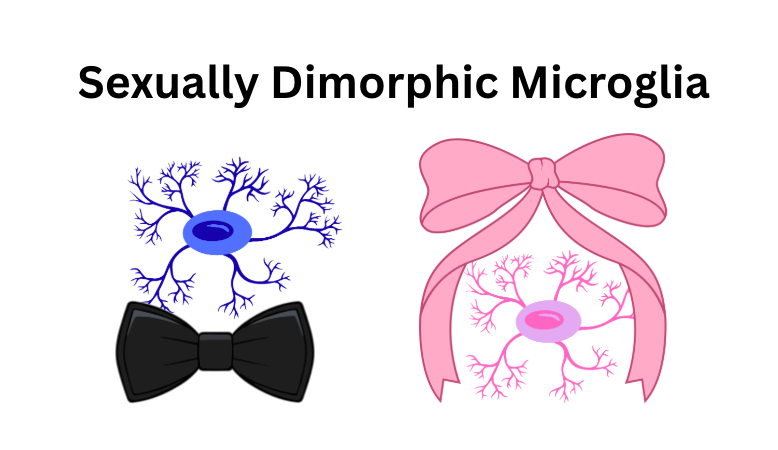
If you are as fascinated by this topic as I am, here are a few things that may blow your mind… It has been seen that certain neurodegenerative disease impact people differently, primarily based on gender. Females are more likely to get Alzheimer’s disease and multiple sclerosis, whereas males more commonly get ALS, Parkinson’s Disease, and spinal muscular atrophy (SMA).3 These differences in disease prevalence between genders lead to the discovery that microglia are sexually dimorphic meaning that male and female microglia are not identical. While that may sound obvious now, it was a BIG discovery! Male microglia have been seen to be more pro-inflammatory while female microglia may be more anti-inflammatory.14
The Plain Speak: The microglia in men and women are different (sexually dimorphic) which is likely the reason certain neurodegenerative diseases seem to target one sex over the other.
As a side note totally unrelated to CJD, it has even been noted that neonatal maternal separation of rodent pups from their mother can impact the microglia morphology and immune challenge response at various ages.20 In that study it was observed that early-life adversity drives sex-specific changes in microglia and can also alter cortical microglial activation, hippocampal gene expression, synaptic markers, and immune cell populations in sex-specific ways at various ages, and exacerbates amyloid deposition, particularly in females.20 How wild is that?! These sex differences have been critically studied in the case of Alzheimer’s disease which at a stretch, has some similarities to prion diseases such as CJD.
Out of the population living with Alzheimer’s disease roughly two thirds are women. Contrarily, CJD has been believed to not have a sex predilection, affecting men and women roughly 1:1. An analysis of the incidence of CJD from 1979-2006 supported this idea but when reassessed from 2007-2020 to account for aging populations worldwide, it was seen that older individuals and women were disproportionately affected.10 While I have yet to find papers analyzing the role of microglial sexual dimorphism in CJD, it may be similar to what has been observed in Alzheimer’s disease. If anyone reading this wants to dive into this, we may have a fun research project on our hands.
This post wouldn’t be complete without connecting things back to veterinary medicine. As you have learned, there are a plethora of prion diseases that can impact specific species, and some that can even “jump” species barriers… how lovely. Here is a little diagram to help keep them all straight.

If you are anything like me, you may be thinking why don’t we learn more about these diseases in vet school and where do dogs fall along this spectrum?
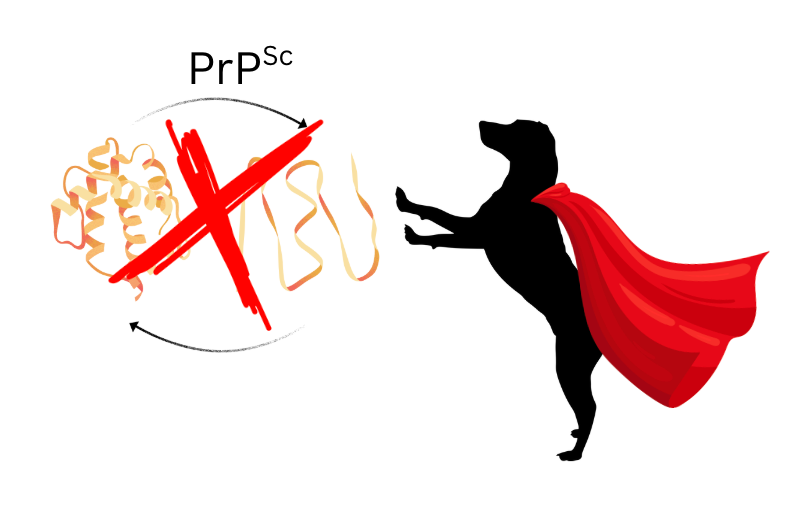
Interestingly, prion disease has never been described in dogs, even when known exposure to BSE occurred. This mind-boggling phenomenon led researchers to analyze the canine PRNP gene which, as you now know, encodes the normal cellular prion protein PrPC (look at how much you are learning!). They found the presence of a negative charged amino acid residue in position 163 which was identified as important since this differed from all other species known to be susceptible to prion disease.25
In the study, a transgenic mouse model expressing dog prion protein PrP was challenged intracerebrally with a panel of prion isolates. Surprisingly, none of which were able to infect them! These mice brains were then subjected to in vitro prion amplification, and researchers failed to find even scant amounts of misfolded prions which provided experimental evidence that dogs are resistant to prion disease. Furthermore, a second transgenic mouse model was created in which aspartic acid in position 163 was swapped for asparagine, which is common in prion susceptible species. This swap resulted in susceptibility to BSE-derived isolates which strongly supported the hypothesis that the amino acid residue at position 163 of canine cellular prion protein PrPC is a major determinant of the phenomenal resistance of the Canidae family to prion infection.25 This is exciting information and may provide some insight on how these diseases can be targeted in the future!
The Plain Speak: Dogs are resistant to prion disease because of a specific negatively charged amino acid residue (either aspartic acid or glutamic acid) at position 163 of their prion protein. This may help researchers create targeted therapies for prion diseases in the future!
To tie everything together, and reflect back on the pathology report, my grandmother passed away from sporadic CJD M/M(1)1(2). This is the most common form of human prion disease and makes up roughly 60-70% of sporadic CJD cases. It is characterized by methionine homozygosity at codon 129 of the PRNP gene and Type 1 abnormal prion protein (PrPSc). This mutation is accompanied by rapidly progressive dementia, myclonus, and a short survival time, usually under 6 months all of which were seen in her case.
Congratulations, you have made it through this wild overview of prion diseases! There were lots of twists and turns, and I hope you enjoyed diving into this fascinating topic. While there has been an increasing amount of research on these diseases, there is still a ton of work that needs to be done, and I am excited to continue to watch our understanding evolve!
Acknowledgement
I would like to thank Dr. Christina Sigurdson for providing resources during this self-guided study on prion diseases along with my family for reliving this experience and filling in my memory.
References
Aguzzi, Adriano, and Caihong Zhu. “Microglia in Prion Diseases.” The Journal of Clinical Investigation, American Society for Clinical Investigation, 1 Sept. 2017, www.jci.org/articles/view/90605.
Appleby, B. (2018, August 29). Prion disease/CJD (Creutzfeldt-Jakob disease) basics [Video]. YouTube. https://youtu.be/aEPLGEgrcvM
Bianco, A., Antonacci, Y., & Liguori, M. (2023). Sex and gender differences in neurodegenerative diseases: Challenges for therapeutic opportunities. International Journal of Molecular Sciences, 24(7), 6354. https://doi.org/10.3390/ijms24076354
Bradford, B., & Mabbott, N. (2012). Prion disease and the innate immune system. Viruses, 4(12), 3389–3419. https://doi.org/10.3390/v4123389
Britannica Editors. (2026, March 12). Creutzfeldt-Jakob disease. Encyclopaedia Britannica. https://www.britannica.com/science/Creutzfeldt-Jakob-disease
Brown, Travis. “Episode 14: Creutzfeldt-Jakob Disease (CJD), Mad Cow & Prion Disease: The Bovine Blender.” Apple Podcasts, 11 Apr. 2022, podcasts.apple.com/us/podcast/this-medical-life/id1601195297?i=1000557175231.
Cheon, Y. P., Ryou, C., & Svedružić, Ž. M. (2024). Roles of prion proteins in mammalian development. Animal Cells and Systems, 28(1), 551–566. https://doi.org/10.1080/19768354.2024.2436860
Cipolla, M. J. (2009). The cerebral circulation. Morgan & Claypool Life Sciences. https://www.ncbi.nlm.nih.gov/books/NBK53084/
Collie, D. A., Sellar, R. J., Zeidler, M., Colchester, A. C. F., Knight, R., & Will, R. G. (2001). MRI of Creutzfeldt–Jakob disease: Imaging features and recommended MRI protocol. Clinical Radiology, 56(9), 726–739. https://doi.org/10.1053/crad.2001.0771
Crane, M. A., Nair-Desai, S., Gemmill, A., Romley, J. A., & Probasco, J. C. (2024). Change in epidemiology of Creutzfeldt-Jakob disease in the US, 2007–2020. JAMA Neurology, 81(2), 195–197. https://doi.org/10.1001/jamaneurol.2023.4678
Gajdusek, D. C., Gibbs, C. J., & Alpers, M. (1966). Experimental transmission of a kuru-like syndrome to chimpanzees. Nature, 209, 794–796. https://doi.org/10.1038/209794a0
Hadlow W. J. (2008). Kuru likened to scrapie: the story remembered. Philosophical transactions of the Royal Society of London. Series B, Biological sciences, 363(1510), 3644. https://doi.org/10.1098/rstb.2008.4013
Hamada, Y., Deguchi, K., Tachi, K., Kita, M., Nonaka, W., Takata, T., Kobara, H., Touge, T., Satoh, K., & Masaki, T. (2022). Significance of cortical ribboning as a biomarker in the prodromal phase of sporadic Creutzfeldt-Jakob disease. Internal Medicine, 61(17), 2667–2670. https://doi.org/10.2169/internalmedicine.8354-21
Kodama, L., & Gan, L. (2019). Do microglial sex differences contribute to sex differences in neurodegenerative diseases? Trends in Molecular Medicine, 25(9), 741–749. https://doi.org/10.1016/j.molmed.2019.05.001
Kovač, V., & Čurin Šerbec, V. (2022). Prion protein: The molecule of many forms and faces. International Journal of Molecular Sciences, 23(3), 1232. https://doi.org/10.3390/ijms23031232
Li, B., Chen, M., & Zhu, C. (2021). Neuroinflammation in Prion Disease. International journal of molecular sciences, 22(4), 2196. https://doi.org/10.3390/ijms22042196
Liu, Y., Guo, J., Matoga, M. et al. NG2 glia protect against prion neurotoxicity by inhibiting microglia-to-neuron prostaglandin E2 signaling. Nat Neurosci 27, 1534–1544 (2024). https://doi.org/10.1038/s41593-024-01663-x
Nobel Prize Outreach. (1997). Different prions affect different regions of the brain. NobelPrize.org. https://www.nobelprize.org/prizes/medicine/1997/7836-different-prions-affect-different-regions-of-the-brain/
Prusiner, S. B. (1998). Prions. Proceedings of the National Academy of Sciences of the United States of America, 95(23), 13363–13383. https://doi.org/10.1073/pnas.95.23.13363
Reed, E. G., & Keller-Norrell, P. R. (2023). Minding the Gap: Exploring Neuroinflammatory and Microglial Sex Differences in Alzheimer's Disease. International journal of molecular sciences, 24(24), 17377. https://doi.org/10.3390/ijms242417377
Release Chimps. (n.d.). Fatal infections research history. https://releasechimps.org/research/history/fatal-infections
Smyth, L.C.D., Kipnis, J. Redefining CNS immune privilege. Nat Rev Immunol 25, 766–775 (2025). https://doi.org/10.1038/s41577-025-01175-0
Smith, A., Groveman, B. R., Winkler, C., Williams, K., Walters, R., et al. (2022). Stress and viral insults do not trigger E200K PrP conversion in human cerebral organoids. PLOS ONE, 17(10), e0277051. https://doi.org/10.1371/journal.pone.0277051
Tokph, K. (2019, March 20). Prions | Mechanism of classical Creutzfeldt-Jakob disease (cCJD) [Video]. YouTube. https://youtu.be/ObL8Ba7TWPI
Vidal, E., Fernández-Borges, N., Eraña, H., Parra, B., Pintado, B., Sánchez-Martín, M. A., Charco, J. M., Ordóñez, M., Pérez-Castro, M. A., Pumarola, M., Mathiason, C. K., Mayoral, T., & Castilla, J. (2020). Dogs are resistant to prion infection, due to the presence of aspartic or glutamic acid at position 163 of their prion protein. FASEB journal : official publication of the Federation of American Societies for Experimental Biology, 34(3), 3969–3982. https://doi.org/10.1096/fj.201902646R
Zabel, M. D., & Reid, C. (2015). A brief history of prions. Pathogens and disease, 73(9), ftv087. https://doi.org/10.1093/femspd/ftv087
Zerr, I., Kallenberg, K., Summers, D. M., Romero, C., Taratuto, A., Heinemann, U., et al. (2009). Updated clinical diagnostic criteria for sporadic Creutzfeldt-Jakob disease. Brain, 132(Pt 10), 2659–2668. https://doi.org/10.1093/brain/awp191


Comments